Crochet Stitches Explained
Crochet is a creative, relaxing, and rewarding craft—but understanding crochet stitches and terms is essential, especially when following patterns. Patterns often use US and UK stitch abbreviations, which can be confusing for beginners and even intermediate crocheters. This guide lists all the most common stitches, terms, and abbreviations with easy explanations, plus tips and a downloadable cheat sheet to help you crochet with confidence.
Why Crochet Abbreviations Matter
Crochet patterns are written in shorthand to save space and make instructions easier to read. Knowing the difference between US and UK abbreviations ensures your project turns out exactly as intended. Misreading a single abbreviation can change the size, texture, or look of your project, so a quick reference guide is a must-have for every crocheter.
Every crochet project begins with stitches — the building blocks that shape fabric, texture, and design. On this page, you’ll learn a wide variety of crochet stitches, from basic foundations like chains and single crochet to more varied stitch techniques that add texture, dimension, and visual interest to your work.
Whether you’re a complete beginner or a crocheter looking to expand your skills, understanding these stitches will empower you to read patterns, experiment with textures, and bring creative ideas to life.
35% Raverly Sale
What are crochet stitches?
Crochet stitches are the individual loops and movements made with a crochet hook and yarn that form the fabric of a crochet project.
Why do crochet stitches matter?
Crochet stitches determine the texture, shape, drape, and strength of your project — from tight, dense textiles to open, decorative lace patterns.
What is the first stitch you should learn in crochet?
The first stitch every crocheter learns is the chain stitch, followed by the slip knot, which anchors your yarn to the hook.
What is the difference between single, half double, and double crochet?
Single crochet creates dense fabric, half double crochet is medium-height and versatile, and double crochet produces taller, lighter stitches with more drape.
What are FLO and BLO stitches in crochet?
FLO (Front Loop Only) and BLO (Back Loop Only) are techniques where you work into only one loop of a stitch to create texture and visual interest.
Are textured crochet stitches harder than basic ones?
Textured crochet stitches often build on basic stitches, so once the fundamentals are mastered, textured stitches become easy and rewarding to learn.
Can crochet stitches be combined in patterns?
Yes — combining stitches like shells, clusters, post stitches, and lace patterns opens up creative design possibilities in blankets, garments, and accessories.

Crocheting in the round is a foundational skill, but starting with a simple chain ring often leaves a noticeable hole in the center. The Magic Ring solves this problem by creating an adjustable loop you can tighten, leaving a neat, professional finish.
Crochet Basics
A loop is the round strand of yarn that forms the building blocks of every stitch. The working loop is the one currently sitting on your hook, ready for the next step.
In crochet, “repeat from ” tells you to go back to the asterisk symbol and work the same set of stitches again until the pattern says to stop. It’s a shorthand used to avoid rewriting identical instructions.
In crochet patterns, “space before” and “space after” refer to the open gaps just before or after a specific stitch or stitch group. These spaces help you know exactly where to insert your hook to keep your pattern even and accurate.
A stitch is one complete movement of yarn that forms part of your crochet fabric. Each stitch has a top “V” shape and counts toward your total stitch number in a row or round.

Before you even make your first chain, every crochet project starts with a simple loop called the slip knot. It’s the first thing you place on your crochet hook, and it’s what anchors your yarn so you can begin crocheting with control and confidence.
Though small, the slip knot is one of the most important crochet basics — and mastering it will make starting any project so much easier. In this guide, you’ll learn what a slip knot is, how to make one step by step, and how to fix common mistakes that beginners often face.

Every crochet project begins with one essential step, the foundation row. This is where your stitches first take shape and where your project truly begins. Whether you’re making a blanket, scarf, or small coaster, understanding how to create a strong and even foundation row will make the rest of your crochet journey much smoother.
A chain space is the open gap made by one or more chain stitches in a previous row or round. Patterns often use these spaces for decorative stitches or shaping.
Basic Crochet Stitches

The 2 Double Crochet Stitch (2 DC Stitch) is a simple, versatile stitch for adding texture, clusters, or decorative effects to your crochet work. It works beautifully alone or as part of shells and larger patterns, giving your projects subtle dimension and charm.

The 3 Double Crochet Stitch (3 DC Stitch) is a simple yet versatile technique for adding clusters, mini-shells, or texture to your crochet projects. It pairs beautifully with shell stitches, cross stitch patterns, and post stitches for eye-catching, dimensional designs.
The chain stitch (abbreviated as CH) is the first stitch every crocheter learns, it’s the foundation of nearly every crochet project. Building upon that, the chain space (abbreviated as CH-SP) is the open gap created by chains within your fabric. Together, these two techniques give crochet its structure, drape, and decorative openness.
Whether you’re just starting out or improving your skills, this guide covers everything from making your first chain to mastering chain spaces in patterns ,complete with step-by-step instructions, examples, common mistakes, and beginner-friendly practice exercises.
The Granny Stitch is one of the most iconic and beloved crochet stitches. Famous for its use in the classic granny square, this stitch is a must-learn for every crocheter.
In US crochet terms, it’s called the Granny Stitch, while in UK terms, it’s made using treble crochet (TR) clusters. The stitch forms clusters of three double crochets (US) or three trebles (UK) worked into chain spaces, creating a beautifully open, textured design.
Whether you’re crocheting your first blanket or adding a retro touch to your home décor, learning the Granny Stitch opens up a world of creative possibilities!

The Front Loop Only (FLO) crochet stitch is a simple but striking technique that transforms the look and texture of your crochet fabric. Instead of working through both loops of a stitch, you insert your hook into the front loop only, the loop closest to you. This subtle variation adds texture, movement, and decorative ridges to your projects.
Whether you’re working on a blanket, hat, border, or textured design, the FLO method is a beautiful way to elevate even the most basic stitches.
Before you even make your first chain, every crochet project starts with a simple loop called the slip knot. It’s the first thing you place on your crochet hook, and it’s what anchors your yarn so you can begin crocheting with control and confidence.
Though small, the slip knot is one of the most important crochet basics — and mastering it will make starting any project so much easier. In this guide, you’ll learn what a slip knot is, how to make one step by step, and how to fix common mistakes that beginners often face.

The chain stitch may seem simple, but it’s crucial to get it right before moving on to other stitches. Mastering even tension and counting chains accurately will make your crochet journey much smoother. Once you feel comfortable, you can start combining chain stitches with single crochet, double crochet, and more to create beautiful patterns.
Every crochet project begins with one essential step, the foundation row. This is where your stitches first take shape and where your project truly begins. Whether you’re making a blanket, scarf, or small coaster, understanding how to create a strong and even foundation row will make the rest of your crochet journey much smoother.
A chain space is the open gap made by one or more chain stitches in a previous row or round. Patterns often use these spaces for decorative stitches or shaping.

The single crochet stitch (sc) is the foundation of crochet. Once you’ve mastered it, you’ll be ready to learn taller stitches like half double crochet (hdc) and double crochet (dc). With a bit of practice, you’ll use this simple yet versatile stitch in nearly every crochet project.

The half double crochet stitch (hdc) is simple, quick, and beautifully textured. It bridges the gap between single and double crochet, offering endless creative possibilities for all types of crochet patterns. Mastering the HDC stitch will open the door to countless projects and stitch combinations.

The double crochet stitch is one of the most widely used stitches in crochet, known for its taller height and versatility. In US terms, it is called DC, while in the UK it is referred to as Treble (TR). This stitch creates a fabric that is lighter and more open than single or half double crochet, making it ideal for blankets, scarves, shawls, and lacy patterns.
Double crochet is often used in textured patterns, shell stitches, and decorative designs, making it an essential stitch for beginners who want to expand their skills and create more varied projects.

The Back Loop Only technique is a simple yet transformative way to change the texture of your crochet. By working into just one loop, you can create flexible, ribbed fabrics that look beautiful and feel comfortable to wear. It’s an excellent skill for beginners who want to elevate their crochet from flat, basic fabrics to more dynamic and professional-looking pieces.
While the slip stitch may appear simple at first, it is fundamental to a wide range of crochet techniques. Learning to control tension, maintain stitch consistency, and use slip stitches creatively allows beginners to progress confidently into more complex projects. Once comfortable, you can combine slip stitches with other stitches like single crochet, half double crochet, or double crochet to create elegant joins, decorative motifs, and precise finishing edges in your work. Mastery of the slip stitch opens the door to professional-looking crochet projects and lays the groundwork for more advanced stitches.

The treble crochet stitch (tr) is a tall, elegant stitch that adds beautiful texture and flow to your crochet work. Once you’ve mastered single, half double, and double crochet, the TR stitch is the natural next step in expanding your crochet skills. It’s versatile, airy, and an essential part of any crocheter’s stitch library.
Textured Crochet Stitches

The Back Post Double Crochet (BPdc) stitch is the perfect companion to the Front Post Double Crochet. While the FPdc brings the stitch forward, the BPdc pushes it backward — creating a recessed texture that adds depth and dimension to your crochet work.
This stitch is ideal for ribbing, cables, and reversible fabrics, and it’s often used alongside the FPdc to create beautifully textured crochet patterns such as basketweave and waffle stitch. Despite its professional look, the BPdc is easy to learn and only slightly modifies the standard double crochet technique.

The back post half double crochet stitch is an excellent way to add depth and texture to your crochet projects. With consistent tension, careful hook placement, and practice combining BP HDC with FP HDC, you can create professional-looking patterns like basket weave, cables, and ribbing. Mastery of this stitch opens the door to more complex and visually engaging designs, giving your crochet projects a polished, textured finish.
The back post treble crochet stitch is an advanced yet beginner-friendly way to create recessed textures and three-dimensional patterns in your crochet projects. With consistent tension, careful hook placement, and practice combining BP TR with FP TR, you can craft professional-looking designs like basket weave, cables, and ribbing. Mastery of this stitch enhances the visual depth of your projects and allows for more complex, visually striking crochet patterns.

The Brick Stitch is built by alternating rows of chain stitches and clusters of double crochets. The chain rows act as mortar lines, while the clusters form the bricks.

The Front Post Double Crochet (FPdc) stitch is a textured crochet technique that adds raised ridges or columns to your fabric. It’s often used in ribbing, cables, waffle stitch patterns, and other designs that require depth and dimension.
If you’re comfortable with basic double crochet, the FPdc is a natural next step. Instead of working into the top of the stitch, you crochet around the post (the vertical part of the stitch), which brings the stitch forward and creates a 3D effect.
The Front Post Half Double Crochet stitch (FPhdc) is an easy way to create raised textures in your crochet projects. It combines the softness of HDC with the dimension of post stitches, producing professional-looking ribbing and patterns.
The front post treble crochet stitch is a powerful technique for adding height, texture, and depth to your crochet projects. With consistent practice, careful hook placement, and controlled tension, FP TR can create professional, raised patterns that enhance blankets, scarves, hats, and other items. Mastery of this stitch allows beginners to explore dramatic textures, 3D effects, and advanced designs, elevating the visual interest and complexity of their projects.

The Griddle Stitch, also known as the Lemon Peel Stitch , is one of the easiest ways to add texture and dimension to your crochet projects. This stitch alternates single crochet and double crochet stitches across the row, creating a balanced, woven texture that’s soft, dense, and beautifully even. Perfect for beginners, the Griddle Stitch is a simple two-stitch repeat that looks intricate but is easy to remember making it ideal for blankets, scarves, dishcloths, and garments.

The Herringbone Double Crochet (HbDC) Stitch is a versatile and striking crochet stitch that creates a dense, textured fabric with a subtle diagonal pattern, resembling a herringbone weave. It’s perfect for blankets, scarves, bags, and garments that need both structure and softness.
This stitch is slightly taller than a regular double crochet but shorter than a treble, making it ideal for projects where you want a firm but flexible fabric. Its distinctive diagonal lines give projects a modern, elegant look, making the HbDC Stitch a favorite among crocheters of all skill levels.

The Moss Stitch, also commonly known as the Linen Stitch or Granite Stitch, is one of the most elegant and versatile crochet stitches you can learn. It’s simple enough for beginners yet produces a professional, woven-like texture that looks intricate and clean.
This stitch is built from just basic crochet stitches, chains and single crochets (in US terms) or chains and double crochets (in UK terms). The combination of solid and open spaces gives the fabric a flat, neat appearance with subtle texture and beautiful drape.
Because of its balance and simplicity, the Moss Stitch is ideal for a wide variety of projects, from cozy blankets and scarves to dishcloths and wearables. It’s a perfect next step for beginners who want to move beyond basic rows and explore texture and rhythm in crochet.

The Primrose Stitch is a charming and decorative crochet stitch that creates a soft, floral-like texture across your fabric. It’s formed with a repeating pattern of chains, single crochets, and double crochets, giving it a delicate yet structured look. The result is a fabric that feels light, slightly lacy, and full of dimension—making it perfect for spring-inspired blankets, shawls, scarves, and baby projects.
This stitch is easy enough for beginners but produces results that look beautifully intricate, offering a great way to practice rhythm, spacing, and consistent stitch height.
The Side Saddle Stitch is a wonderfully textured crochet stitch that creates a slightly diagonal, woven effect. It’s made by combining groups of double crochets and single crochets in a repeating pattern that “leans” across the fabric, giving it its saddle-like appearance.
This stitch has excellent structure and works well for blankets, dishcloths, and scarves. The combination of height and compactness makes it both decorative and durable.

The Spider Stitch is a simple yet stunning crochet texture made from single crochets and chains. It forms a dense, flexible, and evenly textured fabric that’s perfect for cozy projects like blankets, scarves, and dishcloths.
Despite its spooky name, this stitch is anything but scary, it’s one of the easiest patterned stitches you can learn! It’s made with repetitive movements that are relaxing and meditative, making it an excellent choice for beginners or anyone who loves rhythmic crochet.

The Suzette Stitch is a beautifully balanced, textured crochet stitch made from simple combinations of single and double crochet stitches. Its subtle texture and even structure make it perfect for cozy blankets, washcloths, scarves, and garments. The Suzette Stitch looks elegant yet is incredibly beginner-friendly it’s all about rhythm and repetition. This stitch works up quickly, lies flat, and creates a dense but flexible fabric with a soft feel and a lovely, pebbled texture.

The back post single crochet stitch is an excellent way for beginners to explore texture and add depth to crochet projects.
With consistent practice, proper tension, and careful hook placement behind the stitch posts, BP SC can create professional-looking recessed designs that pair beautifully with front post stitches and other textured techniques.
Mastery of this stitch opens the door to more complex patterns, such as basket weave, cables, and ribbing, allowing beginners to elevate their crochet skills.
The Front Post Single Crochet stitch (FPSC) is a simple way to add raised texture to your crochet projects. It’s ideal for creating professional-looking ribbing and cables using a basic stitch variation.
Decorative Crochet Stitches
The 2 Double Crochet Stitch (2 DC Stitch) is a simple, versatile stitch for adding texture, clusters, or decorative effects to your crochet work. It works beautifully alone or as part of shells and larger patterns, giving your projects subtle dimension and charm.
The 3 Double Crochet Stitch (3 DC Stitch) is a simple yet versatile technique for adding clusters, mini-shells, or texture to your crochet projects. It pairs beautifully with shell stitches, cross stitch patterns, and post stitches for eye-catching, dimensional designs.

The 4 Double Crochet Cluster Stitch is a gorgeous way to add soft texture and dimension to your crochet projects. Similar to the 5 double crochet cluster, this variation uses four double crochets joined together at the top to form a puff-like stitch that’s slightly flatter and lighter, perfect for cozy blankets, scarves, or accent rows.
This stitch is a great next step once you’ve mastered the basic double crochet. It gives your crochet fabric a subtle, decorative texture while keeping it flexible and easy to work with.

The 5 Double Crochet Cluster Stitch is a lovely textured stitch that brings fullness and depth to your crochet projects. It’s perfect for adding interest to blankets, scarves, and other cozy makes.
Clusters create a soft, puffed look by partially completing several stitches together before joining them into one top, forming a raised, decorative stitch that feels rich and dimensional. If you enjoy texture, this is a must-learn stitch for your crochet toolkit!


The Basketweave Stitch is a timeless crochet texture that perfectly mimics the look of woven baskets. It combines front post and back post double crochet stitches to create a grid-like pattern with raised and recessed blocks.
The Granny Stitch is one of the most iconic and beloved crochet stitches. Famous for its use in the classic granny square, this stitch is a must-learn for every crocheter.
In US crochet terms, it’s called the Granny Stitch, while in UK terms, it’s made using treble crochet (TR) clusters. The stitch forms clusters of three double crochets (US) or three trebles (UK) worked into chain spaces, creating a beautifully open, textured design.
Whether you’re crocheting your first blanket or adding a retro touch to your home décor, learning the Granny Stitch opens up a world of creative possibilities!

The Bobble Stitch is a fun and textured crochet stitch that adds dimension and charm to your projects. It creates small, raised “bobbles” that pop out from the fabric, giving a playful, tactile look.
In US crochet terms, it’s called the Bobble Stitch, while in UK crochet, the equivalent uses treble (TR) or half treble (HTR) clusters to achieve the same raised texture.
This stitch is perfect for blankets, scarves, hats, and decorative panels, and it’s an excellent way for beginners to practice working multiple loops together to form a three-dimensional effect.
The Brick Stitch is built by alternating rows of chain stitches and clusters of double crochets. The chain rows act as mortar lines, while the clusters form the bricks.
The cluster stitch is a delightful way to add texture and charm to your crochet projects. Once you understand how to control tension and maintain smooth motion when closing loops, you’ll find it easy and enjoyable to use.
This stitch pairs beautifully with openwork, shells, or puff stitches for dynamic patterns. Whether you’re making cozy blankets, stylish scarves, or intricate home décor, the cluster stitch will quickly become one of your go-to techniques for adding depth and texture.

The Crochet Cross Stitch is a versatile and decorative technique that adds diagonal texture and visual interest to your crochet projects. Once mastered, it can elevate simple designs into textured, professional-looking pieces.

The Crossed Double Crochet Stitch is a beautiful, textured stitch that adds movement and visual interest to your crochet projects. It’s created by crossing stitches over each other — forming an “X” pattern that looks intricate but is simple to master. In US crochet terms, this stitch uses double crochet (DC) stitches worked out of order to create the crossing effect. In UK terms, this stitch uses treble crochet (TR) stitches worked in the same way.
This versatile stitch is great for blankets, scarves, borders, and garments, and can be worked in several variations — over 2, 3, or 4 stitches — to achieve different levels of texture and openness.
The crochet wave stitch pattern is a textured stitch that creates a flowing, wave-like pattern across your crochet fabric. This effect is achieved by working a sequence of stitches that gradually move from short stitches to taller stitches, forming gentle peaks and dips similar to ocean waves.
This tutorial explains how to crochet the wave stitch step-by-step, including the stitch sequence, pattern repeats, and helpful tips for beginners. The wave stitch is often used in crochet stitch sampler blankets, but it can also be used for full blankets, scarves, and decorative home projects.
If you're working on a crochet stitch sampler project, this page can serve as a helpful reference guide alongside your pattern instructions and stitch diagrams.

Unlike the traditional Granny Square, which works in rounds, the Granny Stripe Stitch is worked in rows, giving it a linear and modern twist on a vintage favorite. It’s also an ideal pattern for using up leftover yarns making it a popular choice for scrap blankets and stash-busting projects.
The Herringbone Double Crochet (HbDC) Stitch is a versatile and striking crochet stitch that creates a dense, textured fabric with a subtle diagonal pattern, resembling a herringbone weave. It’s perfect for blankets, scarves, bags, and garments that need both structure and softness.
This stitch is slightly taller than a regular double crochet but shorter than a treble, making it ideal for projects where you want a firm but flexible fabric. Its distinctive diagonal lines give projects a modern, elegant look, making the HbDC Stitch a favorite among crocheters of all skill levels.

The Popcorn Stitch is a classic textured crochet stitch known for its bold, raised “popcorn” shapes that add a fun 3D effect to your projects. In US crochet terms, it’s called the Popcorn Stitch, while in UK crochet, it uses treble crochet (TR) stitches worked together to create the same bumpy texture. This stitch is perfect for adding playful detail to blankets, scarves, hats, and decorative panels, and is a great next step for beginners who have learned the bobble or puff stitch and want to experiment with raised, cluster-style textures.
The Primrose Stitch is a charming and decorative crochet stitch that creates a soft, floral-like texture across your fabric. It’s formed with a repeating pattern of chains, single crochets, and double crochets, giving it a delicate yet structured look. The result is a fabric that feels light, slightly lacy, and full of dimension—making it perfect for spring-inspired blankets, shawls, scarves, and baby projects.
This stitch is easy enough for beginners but produces results that look beautifully intricate, offering a great way to practice rhythm, spacing, and consistent stitch height.

The puff stitch is one of the most beloved textured stitches in crochet. Known for its soft, raised appearance, this stitch creates a cozy, cloud-like texture that’s perfect for blankets, scarves, and baby projects.
Unlike a bobble or cluster stitch, the puff stitch is worked by pulling up multiple loops in the same space, giving it a fuller, cushier look while still feeling light and flexible. Once you get the rhythm, this stitch becomes wonderfully addictive — perfect for adding tactile beauty to any crochet design!
The Side Saddle Stitch is a wonderfully textured crochet stitch that creates a slightly diagonal, woven effect. It’s made by combining groups of double crochets and single crochets in a repeating pattern that “leans” across the fabric, giving it its saddle-like appearance.
This stitch has excellent structure and works well for blankets, dishcloths, and scarves. The combination of height and compactness makes it both decorative and durable.
The Spider Stitch is a simple yet stunning crochet texture made from single crochets and chains. It forms a dense, flexible, and evenly textured fabric that’s perfect for cozy projects like blankets, scarves, and dishcloths.
Despite its spooky name, this stitch is anything but scary, it’s one of the easiest patterned stitches you can learn! It’s made with repetitive movements that are relaxing and meditative, making it an excellent choice for beginners or anyone who loves rhythmic crochet.

The V-Stitch is a beginner-friendly decorative stitch that instantly adds texture, openness, and visual interest to your crochet projects. With careful counting, consistent tension, and practice, beginners can create even, professional-looking V-shaped patterns in blankets, scarves, and garments. Mastering this stitch allows you to combine it with other decorative techniques, opening the door to dynamic, textured, and versatile crochet designs.
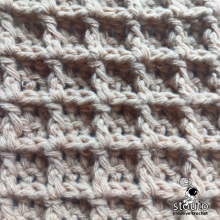
The Waffle Stitch is a beautifully textured crochet stitch that resembles a grid or waffle pattern. It’s warm, thick, and cozy—making it ideal for blankets, dishcloths, scarves, and even sweaters. Despite its intricate look, the Waffle Stitch is surprisingly simple to crochet, using only basic stitches: the double crochet and the front post double crochet. Its raised squares are created through alternating post and regular stitches, giving your project a soft 3D effect that’s both eye-catching and tactile.

The crochet tulip stitch is a beautiful textured stitch pattern that creates rows of delicate tulip-shaped flowers across your crochet fabric. This floral-inspired stitch adds texture and charm to projects such as crochet blankets, scarves, baby afghans, and home décor items.
The tulip stitch combines V-stitches for the stems and popcorn stitches for the petals, creating a raised flower texture that resembles blooming tulips. Once you understand the stitch repeat, the pattern becomes easy to follow and quickly develops a relaxing rhythm.
This tutorial explains how to crochet the tulip stitch step-by-step, with written instructions, stitch diagram guidance, and helpful tips. It can also be used as a reference page when working on blanket patterns or crochet stitch sampler projects that include the tulip stitch.
Advanced Crochet Stitches
The Broomstick Lace Stitch is a decorative and vintage-inspired crochet technique that creates elegant, open loops for a light and lacy fabric. In US crochet terminology, this stitch is known as the Broomstick Lace Stitch, while in UK terms, it uses treble (TR) stitches with elongated loops to achieve the same beautiful effect. Perfect for shawls, scarves, wraps, and summer tops, this stitch adds an airy, delicate touch to any project. For beginners, learning the Broomstick Lace Stitch is an exciting way to experiment with large loops, maintain even tension, and build openwork designs that look intricate yet are surprisingly easy to master.
The Solomon’s Knot Stitch, also known as the Lover’s Knot Stitch, is a delicate and airy crochet stitch that creates an open, lacy fabric. This stitch is perfect for lightweight projects like shawls, wraps, scarves, and summer tops. The beauty of the Solomon’s Knot lies in its simplicity—each knot is made from an elongated loop that adds elegance and texture to your work. Once you master the rhythm of pulling loops and securing them with single crochet, you’ll find it a soothing and versatile addition to your crochet skills.
The Star Stitch, also known as the Marguerite Stitch, is a beautifully textured crochet stitch that creates a series of tiny, flower-like stars across your fabric. It’s one of those stitches that instantly transforms simple yarn into something elegant and eye-catching.
In US crochet terms, it’s called the Star Stitch, while in UK crochet terms, you can achieve the same look using treble (TR) stitches and chain loops. The stitch is ideal for blankets, scarves, shawls, and even home décor projects. For beginners, the Star Stitch introduces the fun technique of working with multiple loops on the hook, improving your yarn control and consistency while creating a stunning texture.
Shell Crochet Stitches
The 5 Double Crochet (DC) Shell Stitch is a classic, decorative crochet stitch that forms charming, fan-shaped shell motifs across your fabric. It’s a versatile stitch perfect for blankets, scarves, shawls, and decorative home projects.
This stitch is beginner-friendly, as it uses only basic crochet techniques like double crochet and single crochet, but creates a professional-looking, textured pattern. The 5 DC shell is slightly smaller than the 6 DC version, offering a tighter, more delicate fan motif.
The 6 Double Crochet (DC) Shell Stitch is a classic and decorative crochet stitch that forms beautiful, fan-like shell motifs across your fabric. Its elegant, scalloped design makes it perfect for blankets, scarves, shawls, and home décor projects.
Despite its fancy appearance, the shell stitch is easy to learn and is a great way for beginners to practice working multiple double crochets into a single stitch or space. The 6 DC shell, in particular, creates a larger, more pronounced fan shape that stands out beautifully in your projects.
The Crochet Shell Stitch is a versatile, decorative stitch that works with HDC, DC, or TR. Shells create beautiful textures and are perfect for adding dimension, lace effects, and fan-like patterns to any crochet project.
Decrease Stitches
Crochet Terms
The Front Loop Only (FLO) crochet stitch is a simple but striking technique that transforms the look and texture of your crochet fabric. Instead of working through both loops of a stitch, you insert your hook into the front loop only, the loop closest to you. This subtle variation adds texture, movement, and decorative ridges to your projects.
Whether you’re working on a blanket, hat, border, or textured design, the FLO method is a beautiful way to elevate even the most basic stitches.
A loop is the round strand of yarn that forms the building blocks of every stitch. The working loop is the one currently sitting on your hook, ready for the next step.
In crochet instructions, “next” refers to the following stitch, space, or row you’ll be working into. It guides you to move forward through your work in the correct sequence.
In crochet, “repeat from ” tells you to go back to the asterisk symbol and work the same set of stitches again until the pattern says to stop. It’s a shorthand used to avoid rewriting identical instructions.
A row repeat is a sequence of one or more rows in a crochet pattern that you work over and over to build the fabric or texture.
In crochet patterns, “space before” and “space after” refer to the open gaps just before or after a specific stitch or stitch group. These spaces help you know exactly where to insert your hook to keep your pattern even and accurate.
In crochet patterns, “space before” and “space after” refer to the open gaps just before or after a specific stitch or stitch group. These spaces help you know exactly where to insert your hook to keep your pattern even and accurate.
A stitch is one complete movement of yarn that forms part of your crochet fabric. Each stitch has a top “V” shape and counts toward your total stitch number in a row or round.
“Yarn over” means to wrap the working yarn over your hook from back to front to form a new loop. It’s one of the most common motions in crochet, used in nearly every stitch.
Before you even make your first chain, every crochet project starts with a simple loop called the slip knot. It’s the first thing you place on your crochet hook, and it’s what anchors your yarn so you can begin crocheting with control and confidence.
Though small, the slip knot is one of the most important crochet basics — and mastering it will make starting any project so much easier. In this guide, you’ll learn what a slip knot is, how to make one step by step, and how to fix common mistakes that beginners often face.
A chain space is the open gap made by one or more chain stitches in a previous row or round. Patterns often use these spaces for decorative stitches or shaping.
The Back Loop Only technique is a simple yet transformative way to change the texture of your crochet. By working into just one loop, you can create flexible, ribbed fabrics that look beautiful and feel comfortable to wear. It’s an excellent skill for beginners who want to elevate their crochet from flat, basic fabrics to more dynamic and professional-looking pieces.
Join the Stouto Creative Crochet Newsletter
