
Discover the Joy of Mixed Stitches in One Beautiful Blanket Pattern
This striped crochet stitch sampler blanket is the perfect choice for anyone who wants to explore different crochet stitches, build skills, and make something stunning in the process. Whether you're a confident beginner or a seasoned crocheter, this pattern brings both challenge and joy—one beautiful row at a time.
35% Raverly Sale
About This Pattern
If you're looking for a relaxing and rewarding crochet project that combines creativity with learning, you're going to love the Striped Afghan-Stitch Sampler Pattern.
- Why You'll Love This Blanket
- Stitches You'll Learn
- Why This Blanket Belongs in Your Queue
- Stitch Sampler Beginners Guide
- Color Selection & Creative Freedom
- Colour Planning Tips
- Beginner Colour Confidence Guide
- What's Inside the PDF Pattern
- Materials used in example blanket project
- Choosing the right yarn
- Which size crochet hook is best
- Yarn Estimate Calculator
- Crochet Blanket Size Information
- Blanket Resizing : Guide
- Beginner-Friendly Guide for Striped Afghan Stitch Sampler Blanket Pattern
- Step by Step Pattern Guide
- Frequently Asked Questions
Why You’ll Love This Crochet Stitch Sampler Blanket
- 120 rows of stitch variety
- Striped layout to showcase your colors
- Mixed stitch combinations for rich texture
- Relaxing yet engaging design
- Soft, cozy finish
This isn’t just a blanket, it’s a journey through texture, color, and stitch variety. Each row in this striped afghan introduces a new stitch or technique, keeping the project fresh and exciting. From timeless classics like double crochet and shell stitch to more textured options like popcorns and front-post stitches, this crochet blanket pattern offers a rich, layered design that’s always interesting to work on.
Inspired by nature and full-flowering gardens, this pattern even includes floral-inspired stitches, such as a tulip-based stitch and a decorative flower wave. You’ll never get bored with this one!

Learn and Practice New Crochet Stitches
Each few row introduces a new stitch or technique, keeping your project exciting from start to finish.
From timeless classics like:
To textured favourites like:
- Popcorn Stitch
- Cluster Stitch
- Front Post Crochet
- Wave & Ripple Stitches
- Tulip Stitch
- Saddle Stitch
…and many more crochet stitches!
This stitch sampler blanket lets you explore a wide range of crochet stitches. Pattern downloads are available in english with both US stitch terminology and UK stitch terminology Here's a sneak peek of what you’ll learn and practice.
The pattern includes stitch notes and diagrams to help you master these techniques as you go.
↑ Back to top

Why This Blanket Belongs in Your Queue
If you love projects that keep your creativity flowing while still feeling calm and rewarding, this crochet stitch sampler blanket deserves a top spot in your queue. Designed to combine relaxation with skill-building, this pattern transforms each crochet session into something fresh and inspiring. Instead of repeating the same stitch for hundreds of rows, you’ll enjoy a gentle rhythm of variety new textures, new techniques, and new visual interest appearing row after row. It’s the perfect companion for relaxing weekend crochet, mindful crafting moments, and those peaceful evenings when you simply want to unwind with your hook and yarn.
This blanket is also a wonderful way to expand your stitch knowledge without the pressure of tackling complex standalone projects. As you work through the sampler, you naturally practise essential stitches, textured combinations, and decorative techniques in a structured, enjoyable format. The striped layout makes it especially satisfying, allowing your colour choices to shine while turning yarn leftovers into a cohesive, artistic design. Whether you're stash-busting, experimenting with colour palettes, or creating a thoughtful handmade gift, this crochet stitch sampler blanket offers flexibility, beauty, and a deeply satisfying sense of progress.Visit my Raverly Store and que the pattern.
Be sure to have a look at all the completerd Blanket Projects on Raverly
- Relaxing weekend crochet
- Expanding stitch knowledge
- Mindful crafting
- Thoughtful handmade gifts
- Using colourful yarn leftovers
Beautifully textured, endlessly engaging, and creatively freeing, this is the kind of blanket project you’ll genuinely look forward to picking up every day.
Stitch Sampler Beginners Guide
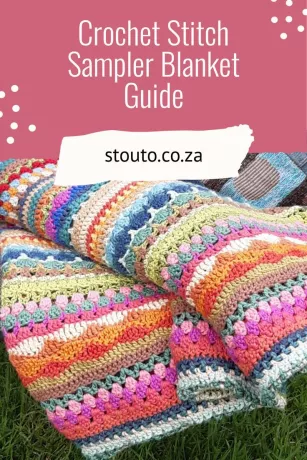
Stitch Sampler Project Help & Tips
This pattern is part of our collection of crochet stitch sampler projects. Stitch sampler patterns combine multiple crochet stitches within one design, allowing you to explore different textures and techniques while creating a beautiful finished project.
If you are new to stitch sampler patterns or would like additional guidance while working through the pattern sections, we have created a helpful guide covering common questions and techniques used in many sampler projects.
The guide includes tips for starting a stitch sampler project, reading stitch diagrams, changing yarn colors, choosing yarn combinations, and resizing blankets or other sampler designs.
Upgrade to the AD FREE PDF Pattern Version


What’s Inside the Crochet Stitch Sampler PDF Download Pattern
- Easy-to-follow written instructions in US terms
- Crochet stitch diagrams with a helpful stitch legend
- Neatly organized stitch abbreviations list and additional stitch information
- Small section images for easy reference
- A starter photo tutorial to guide your first row
- Special stitches section with descriptions
- Helpful diagrams for visual learners
- Gauge information and yarn usage
- Yarn suggestions and tips on how to make your own color scheme.
⚠️ This pdf pattern is for personal use only. Please do not copy or redistribute.Please share and link to website pattern page, if you wish to share free pattern.
Materials & Tools
| Hook | 4mm Crochet Hooks |
|---|---|
| Yarn Weight | Worsted Yarn |
| Fibre Type | Double Crochet (DK) Cotton Yarn |
| Yarn Needed | See : Yarn Estimate Calculator |
| Finished Size | Finished Size: \~70 x 59 inches / 180 x 150 cm |
Materials used in Example Stitch Sampler Blanket

Choosing the right yarn is essential for a joyful crochet experience.
I use DK cotton yarn because it’s soft, breathable, and gives the blanket a lovely drape. But ultimately, the best yarn is the one you love working with! Pick your favorite yarn, grab a hook, and make this pattern truly your own.
- Yarn Weight: DK (Double Knit)
- Hook Size: 4mm / US G-6 / UK 8
- Fiber: 100% Cotton (or your favorite yarn!)
- Gauge: 18 sts x 5 dc rows = 10 x 10 cm
- Rows Included: 120 unique stitch rows
What Kind of Yarn Works Best for my stitch sampler blanket ?
Use what you love!
This pattern is designed with DK cotton yarn for a soft, breathable finish, perfect for any season. But feel free to swap in your favorite fiber or weight—just adjust your hook size and expect slight size differences.
Tip: Make a gauge swatch to calculate your finished size before starting.

Choosing the Right Yarn
Choosing the right yarn is one of the most important decisions when creating your crochet stitch sampler blanket. Yarn fibre, weight, and texture all influence how your blanket will look, feel, and drape once completed.
This pattern was originally designed using DK cotton yarn, which produces a lightweight, breathable blanket with beautiful stitch definition. However, the design is highly versatile and can be made with many yarn types.
Yarn Fibres
Different fibres create very different results:
- Cotton – Crisp stitch definition, breathable, soft drape, ideal for warmer climates
- Acrylic – Lightweight, warm, durable, budget-friendly, easy care
- Wool – Warm, elastic, cosy, excellent for cold-weather blankets
- Blends – Combine benefits such as softness, strength, and warmth
Choose a fibre that suits your climate, comfort preferences, and care routine.
Yarn Weights
Yarn weight directly affects blanket size, thickness, and texture:
- Lighter yarns (Sport / Fingering / DK) → Smaller stitches, finer texture, lighter blanket
- Medium yarns (Worsted / Aran) → Balanced warmth and structure
- Heavier yarns (Chunky / Bulky) → Larger stitches, thicker fabric, larger blanket
Important: The heavier the yarn, the larger and thicker your blanket will be. Conversely, lighter yarns produce a finer, lighter blanket.
If you use a yarn different from the one suggested in the pattern, it is always a good idea to make a small size swatch first to check your finished size.
Texture & Yarn Types
- Smooth yarns highlight stitch definition
- Textured yarns create a softer, blended look
- Cotton emphasises structure and detail
- Wool & acrylic enhance softness and warmth
Because this is a stitch sampler blanket featuring many stitch patterns, yarn choice significantly impacts the visual texture of the finished piece.
Resizing Reminder
If you plan to use a different yarn weight than recommended, be sure to consult the Blanket Resizing Guide. Changing yarn weight or hook size will alter:
- Finished dimensions
- Drape and density
- Yarn usage
- Stitch appearance
Helpful Tips
- Swatch first — especially when substituting yarn
- Check yardage/meterage requirements
- Maintain stitch multiples when resizing
- Consider blanket purpose (summer throw vs winter afghan)
- Use yarn you enjoy working with
There is no single “correct” yarn, only the yarn that suits your style, comfort, and creative vision.
Which size crochet hook is best
Choosing the Best Crochet Hook
The best crochet hook for your stitch sampler blanket usually depends on the yarn you choose.
- Pattern sizes and example blanket size is based on 4mm crochet hook.
- Use the recommended hook size on the yarn label as a starting point.
- Smaller hooks create a tighter, denser fabric.
- Larger hooks create a softer, looser fabric.
For stitch sampler blankets it is best to:
- Use the same hook size throughout the entire project
- Maintain a relaxed and consistent tension
- Avoid switching yarn weight or hook size between rows
Changing yarn or hooks during the blanket can alter the gauge and affect the final size.
Hook Size Adjustments
When changing yarn weight, adjust your hook size accordingly:
- Heavier yarn → Larger hook
- Lighter yarn → Smaller hook
Always crochet a gauge swatch before starting.

Looking for a relaxing yet creative crochet project? This crochet stitch sampler blanket features 120 unique stitch rows, beautiful textures, and endless colour possibilities. Perfect for beginners wanting to learn new stitches or crocheters who love variety.
Yarn Estimate Calculator
Here’s a short, reliable method to get an estimate yarn usage :
- Make a gauge swatch (for example 10 cm × 10 cm) in the double crochet stitch.
- Measure:
- How many stitches across the swatch (stitches_per_swatch)
- How many rows high (rows_per_swatch)
- How many meters of yarn that swatch used (meters_per_swatch) - weigh and convert, or wind and measure.
- Calculate Stitches by swatch:
- stitches_per_swatch = stitches_per_row × rows_in_swatch
- Calculate meters per stitch:
- meters per stitch = meters per swatch ÷ stitches per swatch
- Multiply:
- total meters needed = total number of stitches in project × meters per stitch
Note pattern consist of multiple rows of different stitches but this calculation will give you a good estimate as the longer dc stitch will account for the usage of shorter crochet stitches in the pattern, always add 15 to 20% more, to keep within a safe yarn usage amount, as you do change colors between rows.
Color Selection & Creative Freedom
One of the questions I’m most often asked is: “Where is the exact color chart?” This crochet stitch sampler blanket is not designed as a kit, and therefore does not include a fixed color chart. The colours shown in the example blanket are simply the shades I personally chose for my own project, a reflection of my style rather than a required palette.
My work is deeply inspired by the natural tones found in nature. I naturally gravitate toward colours that feel warm, calming, and organic, shades you might find in a garden, forest, sunset, or coastline. For the sample blanket, I selected a combination of my favourite yarn colours, including creams, browns, copper, gold, orange, wine reds, leafy greens, sea blues, sky blues, and sandy neutrals.
Creating a stitch sampler blanket should always be a joyful and creative process. This pattern is intentionally designed to give you complete freedom in your colour choices. Because each row introduces a different stitch, the blanket celebrates variation, making it perfect for using leftover yarn, stash-busting, and scrap projects.
There are no strict colour rules - only creative possibilities:
- Prefer a soft, airy look? Choose pastel or lighter tones
- Love bold, eye-catching designs? Select vibrant, contrasting shades
- Want a modern neutral blanket? Work within creams, greys, and earthy hues
- Enjoy playful colour mixing? Let your yarn scraps guide you
The beauty of a crochet stitch sampler blanket lies in its uniqueness. No two blankets will ever look the same, and that’s exactly the intention. So don’t be afraid to experiment, combine unexpected colours, or follow your instincts. Your blanket should reflect your creativity, your mood, and your personal style.
The colours used in the example project are meant as inspiration, not instruction.
Colour Planning Tips
Choosing colours for your crochet stitch sampler blanket can feel exciting — and sometimes a little overwhelming. Because this pattern encourages creative freedom rather than strict rules, you can approach colour selection in a way that feels natural and enjoyable.
Here are a few simple strategies to help you build a palette you’ll love:
- Start with a base colour – A neutral shade like cream, grey, beige, or soft white helps anchor the design.
- Choose a mood or theme – Nature tones, pastels, jewel shades, or bold brights all create very different looks.
- Balance light and dark – Mixing contrast adds depth and prevents the blanket from looking flat.
- Repeat colours intentionally – Reintroducing shades throughout the blanket creates harmony.
- Let your yarn stash guide you – Stitch samplers are perfect for leftover yarn and scrap-busting projects.
If you’re unsure, lay your yarn colours side by side before starting. This gives you a visual preview of how your blanket may flow.
Remember ! There is no “wrong” colour combination. The sampler’s beauty lies in its variation and texture.
Beginner Colour Confidence Guide
If you’re new to crochet or colourwork, you might worry about choosing the “perfect” palette. The good news? A crochet stitch sampler blanket is one of the safest and most forgiving projects for experimenting with colour.
Because each row features a different stitch, textures naturally break up colour transitions. This means even unexpected combinations often look beautiful once worked up.
Helpful confidence boosters for beginners:
- Stick to a limited palette – Try 3–5 colours for a cohesive look.
- Use neutrals as buffers – Creams, whites, or greys soften bold transitions.
- Alternate colour intensity – Mix bold shades with softer tones.
- Trust the process – Blankets often look better as they grow.
- Remember: handmade = unique
Most importantly, choose colours that make you happy. Your crochet time should feel relaxing, creative, and enjoyable — not stressful.
Confidence grows with every row, and this sampler blanket is designed to make that journey fun.
Yarn Calculator
Not sure how much yarn you'll need for your next crochet project?
Use our yarn calculator to estimate the amount of yarn required based on your project size, yarn weight, and stitch pattern.
It's a quick and easy way to plan your materials before you start crocheting.
Pattern Instructions
Pattern Notes
Beginner-Friendly Guide for Striped Afghan Stitch Sampler Blanket Pattern
Crochet stitch sampler blankets are wonderful projects for learning and practicing a wide variety of crochet stitches in one beautiful piece. Whether you are a beginner or an experienced crocheter, stitch sampler patterns allow you to explore new textures, techniques, and creative color combinations while building your skills.
This guide was created to help you better understand how stitch sampler patterns work and to provide helpful tips to make your crochet experience easier and more enjoyable.

Understanding Stitch Diagrams in Sampler Patterns
Many stitch sampler patterns include stitch diagrams or stitch charts alongside the written instructions. These diagrams help you visually understand how stitches are placed and how each row builds on the previous one.
For beginners, diagrams may look complicated at first, but they become very helpful once you get used to them. The diagrams are designed to work together with the written pattern.
The written instructions explain what to do step by step, while the diagram shows you the layout of the stitches visually.
Using both together allows you to:
- See how stitches connect in each row
- Understand where stitches should be placed
- Preview upcoming rows quickly
- Learn stitch patterns faster
With a little practice, stitch diagrams become one of the easiest ways to understand how complex stitch combinations come together.
How to Lengthen or Shorten a Stitch Sampler Blanket
Sometimes you may want to adjust the length of your blanket. This is often possible with stitch sampler patterns, depending on how the pattern is structured.
Follow the pattern blanket resize guide:
- Use the blanket resizing instructions for your chosen blanket size.
- See standard blanket sizes table for more.
To make the blanket longer:
- Repeat the stitch pattern sequence from the beginning if resizing instructions are not included.
To make the blanket shorter:
- Continue the pattern until you reach a section with simple stitches such as double crochet or half double crochet rows.
- Finish with a final row of half double crochet for a clean edge.
Consider your border:
- If you adjust the length, choose a simple border design.
- Some decorative borders rely on specific stitch counts and row patterns.
Keep in mind that changing the number of rows may slightly change the overall look and balance of your stitch sampler design.
Choosing the Best Yarn for Stitch Sampler Blankets
The best yarn for your Striped Afghan stitch sampler blanket is simply yarn you enjoy working with and yarn which suits the type of blanket you want to create.
- Choose yarn you love – color and texture make a big difference in enjoyment.
- Focus on softness and durability – blankets should feel comfortable and hold up well with use.
- Use yarn that is easy to find – sampler blankets often use multiple colors.
- Consider stash yarn – these projects are perfect for using leftover yarn.
- Stay within your budget – beautiful blankets can be made with affordable yarns.
- Be sure see my comprehensive breakdown of best yarns to use for this blanket.
Test a Small Stitch Swatch First
Before beginning a large stitch sampler blanket, it can be very helpful to create a small test swatch.
Crochet 2–3 repeats of the stitch pattern to check:
- Stitch tension
- Yarn behavior
- Hook size comfort
- Texture and drape
Testing a small swatch first can prevent sizing issues and helps you become familiar with the stitch pattern before starting the full blanket.
With these helpful tips in mind, you will be well prepared to start your crochet stitch sampler blanket and enjoy learning new stitches while creating something beautiful and unique.
Pattern Notes
- Finish off color by cutting yarn and pulling yarn thru the last worked loop,
- If you wish to work with the same color in your first row, ch 1, and turn work, ch 2 instead of 3 in the next section.
- Start each row by joining a new color, with an sl, chain the required chain to count as the first stitch of each row.
- Always ensure the last stitch of your row is equivalent to the first st chain.
To keep track of your row direction, always start your row on top of the tail stitch from your previous row, meaning; If you work your row, and finish off, your tail sits to your left, when you turn your work, your joining stitch (with tail) will be on your right.
Finish off each row color, by cutting yarn and pulling yarn thru a loop.
Project Size Information
Original Blanket Pattern Size
|
Blanket Size |
Blanket - Inches (cm) |
Starting Chain (Pattern Multiple + Edges) |
Rows required for blanket |
|
Afghan - Original Size |
72 x 59 - (180 x 150 cm) |
252 sts ( 21 pattern repeats + 2sts) |
Rows 1 to 120 |
- Row length creates the length of the blanket
- Amount of rows worked determine the width of the blanket
Meaning your rows and stripes or lines run from top to bottom of the blanket. For a pattern where the lines/ pattern run from left to right or across please see my other patterns available.
- 12 In 1 Stitch Sampler Blanket Pattern for 210 rows in one easy pattern or
- 356 Row Temperature Blanket Pattern for 365 rows of HDC stitch patterns or
- Easy Beginner Stitch Sampler Blanket with 140 rows of mixed crochet stitches.
Resizing Guide

his crochet stitch sampler blanket is designed for creative freedom. No strict colour chart — just choose the yarn shades you love! Ideal for stash-busting, scrap yarn projects, and experimenting with colour combinations.
Original Stitch Sampler Resizing guide
Standard Blanket Sizes and Adjustments
How to Adjust Your Pattern
- Count pattern repeats:
- This pattern uses an odd number of repeats for balance.
- Adjust foundation chain:
- Add or subtract from given stitch count - 2 x 12 stitches (2 x 1 pattern repeat) as indicated above, to keep too uneven sets.
Check starting and ending stitches:
- Include 1 straight stitch on each edge to keep edges straight.
Test a small swatch:
- Crochet a small sample of 2–3 repeats to ensure the texture works with the new stitch count.

From shells and V-stitches to popcorns and waves, this crochet stitch sampler blanket is packed with texture. A relaxing, engaging project that keeps every row interesting.
Extra Tips for Even Edges
Shells & clusters at edges:
If adding stitches, take note of the (halfed stitches ) to accommodate the pattern. Keep track of rows, if you wish to repeat some rows, take note if they are done so in even or uneven sets of rows, and stick to either the even or uneven number or row sets, or your stitches after completing rows won't match up to the stitch count and your blanket will go wobbly.
V-stitches:
Keep the last stitch at the edge consistent (usually a dc) to avoid a lopsided edge.
Post stitches (FP/BP):
Ensure you maintain the correct front/back alignment even after resizing.
Suggested resizing for larger blankets
When following a stitch pattern that relies on V-stitches, shells, clusters, or post stitches, it’s important to maintain an uneven number of repeats for symmetry and texture.
This guide shows how to adjust your starting chain (foundation) for three standard blanket sizes.
Key Notes for Beginners
- Pattern is worked in uneven sets of 12 stitches
- Always add or remove stitches but ensure you have uneven multiples of 12 sts to keep the pattern consistent.
- Check your gauge before starting: Measure 10–20 stitches in your chosen pattern to estimate finished size.
- Pattern repeats: After resizing, count your repeats to make sure there’s still an odd number of multiples of 12 stitch pattern repeats for symmetry.
|
Size |
Measurments |
Starting chain |
Total number of rows |
|---|---|---|---|
| Twin / Single Bed | 60 x 66 in - (152 x 168 cm) | 108 sts (9 pattern repeats + 2sts) | Rows 1 to 120 + Repeat R 1 to 14 |
| Double / Full Bed | 80 x 86 in - (203 x 218 cm) | 276 sts (23 pattern repeats + 2sts) | Rows 1 to 120 + Repeat R 1 to 52 |
| Queen / King Bed | 90 x 108 in - (229 x274 cm) | 300 sts (25 pattern repeats + 2 sts) | Rows 1 to 120 + Repeat R 1 to 101 |

Build your crochet skills while creating a stunning striped blanket. This stitch sampler pattern includes written instructions, diagrams, and helpful stitch notes. A perfect project for confident beginners and beyond.
Blanket Resizing: Adjusting for Yarn Weight and Hook Size
Notes
- Keep stitches an uneven set of 12 stitch repeats
- Note these stitch counts are a guide and can differ depending on your own personal tension.
- Note that you will have to repeat rows to achieve the correct length
- Note below suggestions the pattern / lines will go from left to right / and is based on the width of the standard blanket listed below.
Changing your yarn weight or hook size affects the finished dimensions of your blanket.
To maintain your pattern’s stitch count and proportions, you can calculate how many stitches or rows to add or remove.
1. Gauge = Number of stitches and rows per inch/cm.
Example:
- DK yarn, 4mm hook → 20 sts x 25 rows = 4” x 4” (10cm x 10cm)
- Worsted yarn, 5mm hook → 16 sts x 22 rows = 4” x 4” (10cm x 10cm)
2. Effect of Larger or Smaller Hook
- Larger hook → bigger stitches → fewer stitches needed for the same width.
- Smaller hook** → smaller stitches → more stitches needed for the same width
3. Effect of Heavier or Lighter Yarn
- Heavier yarn (chunky / aran) → larger stitches → fewer chains and rows
- Lighter yarn (sport / fingering) → smaller stitches → more chains and rows
Blanket Resizing Table by Yarn Weight & Hook
Tips for resizing blanket
- Maintain pattern repeats: Each starting chain is calculated as an uneven multiple of 12 + 2 edge stitches to keep V-stitches, shells, and clusters centered.
- Adjust rows slightly if needed: If your gauge differs, scale rows using your swatch.
- Border consistency : Keep starting chain stitch and end stitch intact for straight edges.
- Check center motifs : For large blankets, ensure the central repeat aligns visually.
- Swatch first: Even small differences in tension affect overall size.
You are welcome to use a larger crochet hook with a thicker yarn or a thinner yarn with a smaller hook, but note that blanket will be either larger or smaller than the example size
Blanket Size : Baby (30” x 36”)
- Yarn Weight: DK - Hook : 4mm - Starting Chain (sts) : 108 sts ( 9 x 12 sts repeats) + 2
- Yarn Weight: Worsted - Hook : 5mm - Starting Chain (sts) :84 sts ( 7 x 12 sts repeats) + 2
- Yarn Weight: Aran - Hook : 5.5mm - Starting Chain (sts) : 62 sts ( 5 x 12 sts repeats) + 2
- Yarn Weight: Chunky - Hook : 6.5mm - Starting Chain (sts) :62 sts ( 5 x 12 sts repeats) + 2
Throw (50” x 60”)
- Yarn Weight: DK - Hook : 4mm - Starting Chain (sts) : 156 sts ( 13 x 12 sts repeats) + 2
- Yarn Weight: Worsted - Hook : 5mm - Starting Chain (sts) : 132 sts ( 11 x 12 sts repeats) + 2
- Yarn Weight: Aran - Hook : 5.5mm - Starting Chain (sts) : 108 sts ( 9 x 12 sts repeats) + 2
- Yarn Weight: Chunky - Hook : 6.5mm - Starting Chain (sts) : 84 sts ( 7 x 12 sts repeats) + 2
Twin (66” x 90”)
- Yarn Weight: DK - Hook : 4mm - Starting Chain (sts) : 204 sts ( 17 x 12 sts repeats) + 2
- Yarn Weight: Worsted - Hook : 5mm - Starting Chain (sts) : 180 sts ( 15 x 12 sts repeats) + 2
- Yarn Weight: Aran - Hook : 5.5mm - Starting Chain (sts) : 156 sts ( 13 x 12 sts repeats) + 2
- Yarn Weight: Chunky - Hook : 6.5mm - Starting Chain (sts) : 132 sts ( 11 x 12 sts repeats) + 2
Queen (90” x 108”)
- Yarn Weight: DK - Hook : 4mm - Starting Chain (sts) : 276 sts ( 23 x 12 sts repeats) + 2
- Yarn Weight: Worsted - Hook : 5mm - Starting Chain (sts) : 252 sts ( 21 x 12 sts repeats) + 2
- Yarn Weight: Aran - Hook : 5.5mm - Starting Chain (sts) : 228 sts ( 19 x 12 sts repeats) + 2
- Yarn Weight: Chunky - Hook : 6.5mm - Starting Chain (sts) : 180 sts ( 15 x 12 sts repeats) + 2
King (108” x 108”)
- Yarn Weight: DK - Hook : 4mm - Starting Chain (sts) : 324 sts ( 27 x 12 sts repeats) + 2
- Yarn Weight: Worsted - Hook : 5mm - Starting Chain (sts) : 276 sts ( 23 x 12 sts repeats) + 2
- Yarn Weight: Aran - Hook : 5.5mm - Starting Chain (sts) : 252 sts ( 21 x 12 sts repeats) + 2
- Yarn Weight: Chunky - Hook : 6.5mm - Starting Chain (sts) : 228 sts ( 19 x 12 sts repeats) + 2
Step By Step Blanket Resizing Guide
Step 1: Measure Your Gauge
Before resizing, crochet a Swatch (10x10 cm / 4x4 in) in the stitch pattern you are using.
Count:
- Number of stitches per inch/cm (width)
- Number of rows per inch/cm (height)
Step 2: Calculate New Starting Chain
- Decide your desired finished width.
- Multiply the width in inches/cm by your swatch’s stitches per inch/cm
- New Starting Stitches = Desired Width × Stitches per Inch (from swatch)
Step 3: Adjust for pattern repeats:
- Crochet patterns require an uneven multiple of 12 + 1 stitch for the start and end of each row
- Round your calculation to the nearest uneven multiple of 12, then add 2 edge stitches
Example
- Desired blanket width: 50” (127 cm)
- Using Worsted yarn & 5mm hook: Gauge = 3.5 sts/in (1.38 sts/cm)
- Calculated stitches: 50 x 3.5 ≈ 175 sts
- Pattern requires uneven multiples of 12 → Closest = 181 sts (15 x repeats)
- Add 2 sts =
- 1 stitch at the start of each row (first ch as indicated in the pattern below)
- + 1 stitch (at the end of the row )→ Starting chain = 183 sts
Step 4: Calculate New Row Count (Length)
- Measure rows per inch/cm from your swatch.
- Multiply desired length by rows per inch/cm:
- Total Rows = Desired Length x Rows per Inch (from swatch)
- Adjust rows to match pattern sets or repeats as needed.
Example
- Desired length: 72” (183 cm)
- Gauge = 4 rows/in → 72 x 4 = 288 rows
- Pattern repeats = 15 rows per pattern set → Adjust to nearest multiple of 15 → 285 or 300 rows
Step 5: Adjust Edge Stitches
- Make sure the starting chain and ending stitch remain intact to keep edges straight.
- If the final row count is not a multiple of your pattern set, adjust by adding/removing rows in basic dc, hdc, or sc rows to make it fit.
- For a longer blanket as what there are instructions of the pattern,you can select a pattern section with the same first row stitch pattern as the previous row, and extend your blanket to the length you require.
Step 6: Tips for Beginners
- Swatch first: Always swatch in the actual pattern stitches, not just single dc.
- Keep notes: Record your stitches and rows per inch/cm for reference.
- Check symmetry: Ensure an odd number of pattern repeats for central motifs.
- Border adjustments: A larger or smaller blanket may require more or fewer border rounds.
- Use stitch markers: Place markers at repeat intervals to track patterns across wider blankets.

Cotton, acrylic, wool, or blends? Discover how yarn fibres and weights affect your crochet stitch sampler blanket. Learn how heavier yarn creates a larger blanket and how to resize your project with ease.
Row length creates the length of the blanket
- Amount of rows worked determine the width of the blanket
- Pattern stripes or lines run from top to bottom of the blanket.
For a pattern where the lines/ pattern run from left to right or across please see my other patterns available.
- 12 In 1 Stitch Sampler Blanket Pattern for 210 rows in one easy pattern or
- 356 Row Temperature Blanket Pattern
- Easy Beginner Stitch Sampler Blanket with 140 rows
Pattern Reference
This page is part of a larger crochet pattern and is intended as a companion tutorial or stitch reference. For complete instructions, materials, sizing information, and all pattern sections, please visit the main pattern page.Step by Step
⚠️ This pattern is for personal use only. Please do not copy or redistribute.
Step by Step Pattern Guide
Starting Chain Tips for Your Crochet Stitch Sampler Project
Creating the correct starting chain is one of the most important steps when beginning your crochet stitch sampler blanket. Your starting chain determines the width of the blanket and ensures that the stitch patterns will align properly throughout the project.
Here are some helpful beginner-friendly tips to follow before starting your foundation chain.
Check Your Pattern Stitch Count
Always check the total stitch count required for your blanket size before starting your chain. The stitch count ensures that your stitch repeats will fit correctly across each row.
Following the correct stitch count will help your blanket maintain the intended width and pattern structure.
Confirm the Row Count for Your Blanket Size
Different blanket sizes require different row counts in order to reach the correct finished length.
Before starting your project, review the pattern information to determine the recommended number of rows for your chosen blanket size.
Check if the Pattern Includes Resizing Options
Some patterns include resizing instructions based on creating a size swatch, allowing you to adjust the blanket to different sizes.
Other patterns may only include one fixed blanket size. This information is always mentioned in the pattern notes and pattern information section.
Be sure to review these notes before beginning so you understand whether the pattern allows for resizing adjustments.
Keep Your Starting Chain Even
Try to keep your starting chain loose and even. Chains that are too tight can cause the edge of the blanket to curl or pull inwards.
Many crocheters find it helpful to use a slightly larger hook for the starting chain and then switch back to the recommended hook size for the rest of the pattern.
Using the Foundation Row Technique
Some crocheters prefer using the foundation row technique instead of creating a long starting chain.
If you choose to use this technique, you can skip the first row of written instructions and the first row of the stitch diagram in the pattern.
The foundation row creates both the chain and the first row of stitches at the same time, which can help produce a more flexible edge for blankets.
This method is optional, and you can use either the traditional starting chain method or the foundation row technique depending on your personal preference.
Taking a few moments to prepare your starting chain carefully will help ensure that your stitch sampler blanket begins smoothly and stays consistent throughout the project.
Step-by-Step: Foundation Row for the Stitch Sampler Blanket
Starting your blanket correctly is important because the foundation row determines the width and structure of the entire project. Follow these simple beginner-friendly steps to begin your Original Stitch Sampler Blanket.

1. Start with the Foundation Chain
Begin by chaining the number of stitches required for your blanket size.
The exact number will depend on the size you are making. Use the stitch count provided in the pattern or the number determined from your size swatch.
Try to keep your foundation chain even and not too tight, as this will help your blanket lay flat.
2. Begin the First Row
Once your foundation chain is complete:
- Chain 2 additional stitches
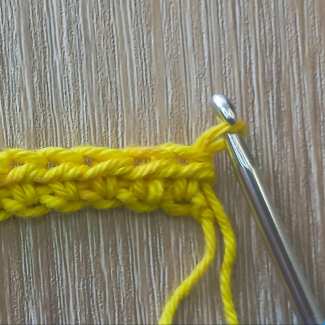
- Work 1 half double crochet (hdc) into the 3rd chain from your hook
These starting chains count as the first hdc of the foundation row.

3. Work Across the Row
Continue by working 1 half double crochet (hdc) into each chain across the row.
Make sure you work into every chain, including the last chain at the end of the row.
This row forms the foundation row that supports all the textured stitches that follow.
4. Start the First Pattern Row
At the end of the row:
- Do not fasten off your yarn
- Chain 3 to turn your work
These chains count as the first stitch of the next row.
You can now begin following the first pattern row instructions of your stitch sampler blanket.
5. Check Your Stitch Count
Before continuing, it’s a good idea to count your stitches.
Make sure the total number of stitches matches the stitch count provided for your chosen blanket size. This ensures your blanket will maintain the correct width and that all pattern repeats will align properly.
Taking a moment to check now will help avoid issues later in the pattern.
This simple foundation row creates a smooth, sturdy base that will support all the beautiful textures and stitch combinations in your stitch sampler blanket.
Take Note of Stitch Counts in Every Row
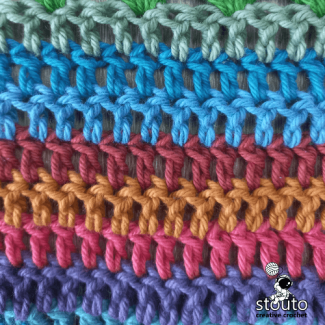
When working a stitch sampler blanket, it is very important to keep track of your stitch counts in every row. Because different stitches and stitch combinations are used throughout the pattern, maintaining the correct number of stitches ensures that your blanket keeps the correct width and that pattern repeats align properly.
A helpful rule when working stitch samplers is to always know what your base row stitch count is. This number usually stays the same, even when different stitches are used in each row.
Example 1
You decide to use 230 stitches for the base row of your blanket.
Example pattern instruction: 1 hdc stitch into each stitch of the row
- 1 stitch = Starting chain of the row (ch2)
- 228 stitches = Pattern stitches worked across the row (228 × hdc)
- 1 stitch = Last stitch of the row
Total stitches = 230 sts

Example 2
Based on example 1 : 230 stitches for the base row of your blanket.
Example pattern instruction: sk1, *3 dc, sk2 – repeat until the second last stitch, sk1
- 1 stitch = Starting chain of the row (ch2)
- 76 x pattern repeats = 3 dc stitch groups
- 1 stitch = Last stitch of the row
Total stitches = 230 sts

Example 3
Based on example 1 : 230 stitches for the base row of your blanket.
Example pattern instruction: sk1, *2 dc, sk1 – repeat until the second last stitch, sk1
- 1 stitch = Starting chain of the row (ch2)
- 144 repeats = 2 dc stitch groups
- 1 stitch = Last stitch of the row
Total stitches = 230 sts

Notes on Skipped Stitches
Always pay attention to skipped stitches in both the written instructions and any pattern diagrams. Skipped stitches are often used to create texture and spacing in stitch sampler patterns.
For example, in one of my blanket patterns the following rows are used as a reference:

Diagram Example Rows 11, 12 & 13
Row 11: Work 2 dc stitches into groups of 3 dc stitches from the previous row. This means that one stitch is skipped between each set of 2 dc stitches.
Row 12: Work a 2 dc stitch group in the space between each pair of dc stitches from the previous row.
Always remember to:
- Chain 1 at the beginning of the row
- Work 1 dc into the last stitch of the row
Rows 11, 12 and 13 should all maintain the same number of 2 dc stitch groups even though the placement of stitches changes between rows.

First and last stitch of each Row
- Some rows in stitch sampler patterns start and end differently.
- Always follow the instructions carefully at the beginning and end of the row.
For example, some rows may start with 1 hdc in the first two stitches before beginning the pattern repeat.
In these cases:
- Work the starting stitches as instructed
- Follow the pattern repeat across the row
- Skip the final stitches that belong to the repeat
- Finish the row by working the final stitch indicated in the pattern
Always make sure you work the last stitch of the row to ensure stitch count stays correct.
Carefully following :
- stitch counts,
- skipped stitches,
- and row instructions
Will help ensure your stitch sampler blanket stays even, balanced, and beautifully textured from beginning to end.
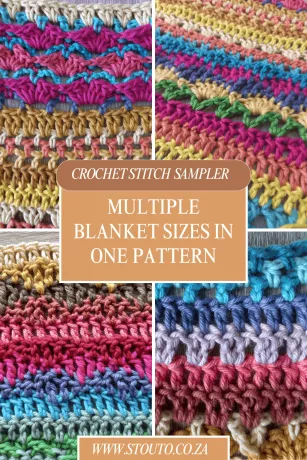
Looking for a Bigger Stitch Sampler Challenge?
If you enjoy working textured crochet stitches, you may also love my Ultimate Crochet Stitch Sampler Blanket. This extended version includes 240 rows of stitch patterns, offering even more opportunities to practice beautiful textured crochet stitches and techniques.
Explore the full pattern here:
More Crochet Stitch Sampler Blanket Patterns
If you enjoy working with a variety of crochet stitches, you may also enjoy exploring more stitch sampler blanket patterns available on the website. Each pattern offers a unique combination of textured stitches and creative designs.
- Ultimate Crochet Stitch Sampler Blanket – A larger sampler blanket with 240 rows of textured crochet stitches.
- Rainbow Crochet Stitch Sampler Afghan – A colorful crochet sampler blanket featuring vibrant stripes and mixed stitches.
- Classic Crochet Stitch Sampler Afghan – A timeless textured crochet blanket designed to help you practice essential stitches.
More Mixed Stitch Crochet Patterns to Explore
I have written and designed many crochet stitch sampler patterns over the years, ranging from cozy blankets to ponchos, scarves, and practical accessories. If you enjoy working with a variety of stitches and textures, be sure to explore some of these patterns for your next crochet project.
Crochet Stitch Sampler Blanket Patterns
- Temperature Blanket – Collection of Mixed Crochet Stitches
- FREE : Mixed Stitch Rainbow Blanket Crochet Pattern
- Rose Garden: A Story Stitch Sampler Afghan Pattern
- Rainbow Striped Baby Blanket
- Quick Work Scrap Yarn Crochet Baby Blanket
Crochet Ponchos and Wearable Patterns
- Shabby Chic Meets Bohemian Boldness – Easy Striped Poncho
- Crochet Poncho for Self-Striping Yarn
- Crochet Boho Scarf
- Winter Crochet Blanket Scarf
Crochet Bags and Accessories
- Striped & Twisted Market Bag
- Cotton Tote Bag – Crochet Lace Flower Stitches
Each pattern explores different crochet stitch combinations, giving you the opportunity to learn new techniques while creating beautiful handmade pieces.
What Other Crocheters Say
This pattern hasn’t been reviewed yet.
Be the first to share your experience and help other crocheters.
Made it work? Share your result
Post a ReviewPattern Copyright & Usage
This crochet pattern and all associated content are the original work of Stouto Crochet.
- ✔️ Personal use allowed
- ✔️ Sell finished handmade items (small-scale)
- ❌ Do not copy, rewrite, or redistribute
- ❌ Do not share or resell PDF patterns
AI & Content Use: This pattern may not be reproduced or used to train AI systems.
Explore More Crochet Tutorials on the Website
If you need extra help while working on your stitch sampler blanket, you can explore the crochet tutorials section on the website. These guides explain crochet stitches, techniques, and pattern methods in a clear and beginner-friendly way.
You’ll find helpful stitch tutorials, visual diagrams, and step-by-step guides that make it easier to learn new stitches and improve your crochet skills while completing your project.
Feel free to explore the additional sections of our website for even more crochet patterns, helpful tutorials, and creative inspiration.
Each section is thoughtfully organized to make it easy to find exactly what you’re looking for and to support you at every stage of your crochet journey.
Crochet Pattern FAQ
Frequently Asked Questions

Q: Do I need a specific colour chart for this blanket?
A: No! This crochet stitch sampler blanket is designed for creative freedom. The colours in the example project are simply inspiration. You can choose pastels, brights, neutrals, or stash leftovers, whatever you love. See Colour Planning Tips for more.
Q: What yarn should I use for this pattern?
A: This pattern works beautifully with DK cotton, but you can use acrylic, wool, or blends. Heavier yarn creates a larger, thicker blanket; lighter yarn produces a finer, lighter blanket. Always check your gauge and see the Resizing Guide if substituting yarn.
Q: Can beginners make this blanket?
A: Yes! While the blanket includes a wide variety of stitches, the pattern provides written instructions, diagrams, and stitch notes. It's perfect for confident beginners or those looking to expand their stitch knowledge.
Q: How big is the finished blanket?
A: The original pattern finishes at approximately 70 x 59 inches (180 x 150 cm). Using different yarn weights or hook sizes will change the size. Check the Resizing Guide for adjustments.
Q: How much yarn do I need?
A: Yarn requirements depend on fibre type, weight, and colour changes. Use the swatch method described in the pattern to estimate usage and always add 15–20% extra for safe measure. Be sure to view Yarn Estimate Calculator to assist you to calculate the correct amount.
Q: Is a colour chart included?
A: No, this pattern does not include a colour chart. Part of the fun is selecting your own colours! Use inspiration from nature or your favourite yarn stash to create a unique blanket. Visit the Colour Planning Tips for a guide on choosing colors.
Q: How do I resize this blanket?
A: Resizing involves adjusting your starting chain, number of repeats, and rows. The Blanket Resizing Guide includes detailed step-by-step instructions for different sizes and yarn weights.
Q: Does the pattern include diagrams?
A: Yes, the PDF pattern includes stitch diagrams, a stitch legend, and photo references to help you visualise each stitch and row.
Q: Can I use leftover yarn or scrap yarn?
A: Absolutely! This stitch sampler blanket is perfect for stash-busting and scrap yarn projects. Each row introduces a new stitch, so you can creatively combine colours and textures.
Q: Is this pattern suitable for gifting?
A: Definitely! The finished blanket is soft, textured, and full of creative colour combinations — making it a thoughtful handmade gift for family and friends.

