
Start Your Crochet Temperature Blanket Journey Today
Looking for the perfect temperature blanket crochet pattern free PDF to keep you inspired all year long? This temperature blanket pattern is more than just another project , it’s a creative memory-maker. Designed as a 365 day crochet blanket, this beginner-friendly design lets you record daily weather changes in yarn, transforming temperatures into a beautiful mix of colour, texture, and personal meaning.
35% Raverly Sale
About This Pattern
Whether you call it a temperature afghan crochet pattern, a weather blanket, or even a Jahresdecke häkeln Anleitung, this project helps you crochet one row per day using colours that match your local temperatures. By the end of the year, you’ll have a one-of-a-kind keepsake blanket that tells your story in stitches.
If you’re searching for a simple temperature blanket crochet pattern free, or a modern temperature blanket crochet project that stays interesting from January to December, this mixed-stitch blanket is designed to keep every row fun and rewarding.=
Quick Navigation
- Why You’ll Love This Pattern
- Materials
- How to Determine Your Temperature Range
- 16-Colour Temperature Chart
- How to Choose the Best Yarn
- How Much Yarn You’ll Need
- Yarn Estimate
- Construction Overview
- Pattern Notes
- What Is a Temperature Blanket?
- How to Start
- Beginner’s Step-by-Step Guide
- Beginner Mistakes to Avoid
- Temperature Blanket Resizing Guide
- What Colours Should I Choose?
- Crochet Abbreviations
- Foundation Row Beginners Guide
- Free Teaser Rows 1–54
- Printable Colour Swatch Templates
- FAQ
- Get the Full PDF
Why This Temperature Blanket Will Be Your Favorite Project
Crochet one row per day and watch your year unfold in color. This free crochet temperature blanket teaser gives you a taste of the full design, including the first 52 rows and a 16-colour chart to help you get started.
The full printable PDF expands the project into a complete 365-row crochet temperature blanket pattern with a printable journal, planning pages, and more than 30 mixed crochet stitch textures to keep every section interesting.
Why crocheters love this pattern
- One row = one day’s high temperature
- 365 rows of texture and colour
- 30+ crochet stitch patterns including simple texture repeats and eye-catching details
- Beginner-friendly progression that starts easy and builds confidence
- Customizable color chart for your local climate
- A meaningful stash-busting project that turns yarn into a year-long keepsake
- Proven winner: Popular Pattern on Etsy, visit my Etsy Store
- Stash-busting magic: ~4,200 yards DK yarn – turn scraps into a 50x70" heirloom.
Whether you’re a beginner building your skills or an experienced crocheted looking for a creative long-term project, this pattern is designed to stay fun, organized, and rewarding from the first row to the final border.
↑ Back to top
A collection of free eBooks.
Explore a variety of helpful resources, guides, and creative content available to download and enjoy at no cost. Feel free to browse the collection, save your favorites, and return regularly as new titles are added.
If you find an eBook you enjoy, you're welcome to share it with your friends and family. You can also share a link to this page so others can explore the collection and choose the eBooks that interest them most.
Upgrade to the AD FREE PDF Pattern Version


Start Your Temperature Blanket Today
Every day tells a story ,and this crochet blanket helps you stitch yours in colour. Whether you’re tracking weather, marking memories, or simply enjoying a relaxing year-long crochet project, this pattern gives you a beautiful way to make 2026 unforgettable.
Try the free teaser rows on this page, then upgrade to the full printable PDF when you’re ready to crochet the complete year.
What’s Included in the PDF Pattern?
- Detailed written instructions for 365 rows
- 30+ mixed crochet stitch tutorials with diagrams
- Printable color swatch templates (4 pre-designed + blank for custom palettes)
- Yearly planning calendar to track temperatures & special dates
- Notes template for yarn brands, colors, and codes
- Resizing chart for multiple blanket sizes
- Pattern terminology and abbreviations in US crochet terms
Download today and begin your crochet temperature blanket journey!
⚠️ This pdf pattern is for personal use only. Please do not copy or redistribute.Please share and link to website pattern page, if you wish to share free pattern.
Materials & Tools
| Hook | 3.5 mm Crochet Hook |
|---|---|
| Yarn Weight | Double Crochet (DK) Cotton Yarn |
| Fibre Type | Cotton Yarn |
| Other Tools | |
| Yarn Needed | See yarn estimates information below |
| Gauge | 12 sts x 6 rows = 6cm x 5cm (2.3" x 1.9") in half double crochet |
| Finished Size | Approx. 166 x 300 cm (65" x 118") with DK yarn and 3.5mm hook |
Materials Used in This Project
- DK cotton yarn in 8–16 colours
- 3.5 mm crochet hook
- Stitch markers
- Tapestry needle
- Scissors
- Temperature tracking journal or printable chart
- Yarn storage bag or basket
How to Determine Your Temperature Range
Start by finding your area’s highest and lowest average daily temperatures. The easiest way is to check the previous year’s weather data for your location using your preferred weather website or app.
Once you know your temperature range, you can plan how many yarn colours you’ll need.
Popular ways to assign colours
- 1 colour per degree for detailed variation
- 1 colour per 2–3°C / °F for wider climate ranges
- 8–12 colours for a simple blanket
- 16 colours for more dramatic daily shifts
Choose a yarn brand that’s easy to repurchase in case you need extra skeins later
For my example, I use 16 colors because our warm climate spans about 16 distinct temperature points , which creates bright, varied stripes.

16-Colour Temperature Blanket Chart (Warm Climate Example)
If you live in a warmer climate, this 16-colour temperature blanket chart is a great place to start. It creates beautiful transitions across your blanket while keeping each row visually meaningful.
You can follow this chart exactly or use it as inspiration to create your own custom palette.
Temperature Blanket Shop Yarn Colors on Amazon!
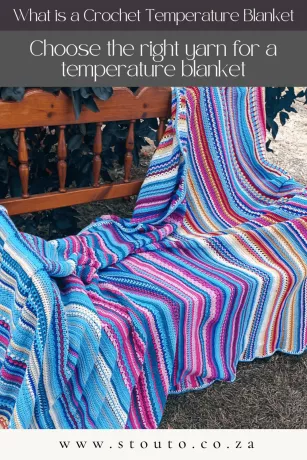
Best Yarn for Your Temperature Blanket
Choosing the right yarn is one of the most important steps in creating a beautiful and functional temperature blanket. The right yarn ensures your stitches look even, your colors pop, and your blanket stays soft and durable throughout the year.
1. Yarn Weight
For this 365-day mixed stitch temperature blanket, DK (double crochet) weight yarn is recommended. It’s lightweight enough to work easily with multiple color changes and creates a blanket that is cozy but not too heavy. You can also use:
- Worsted/Aran for a thicker, warmer blanket
- Sport for a lighter, more delicate finish
- Bulky if you want a quick, chunky project (fewer color changes per row)
2. Fibre Type
Choose yarns that are soft, durable, and machine-washable. Common options include:
- Cotton: Smooth texture, excellent stitch definition, and durable for long-term use.
- Acrylic: Affordable, easy-care, widely available, and comes in vibrant colors.
- Cotton-Acrylic Blends: Combines softness with durability, ideal for beginners.
3. Color Selection Tips
Your yarn colors will represent daily temperatures, so pick a palette that reflects your climate and personal style:
- Use one color per degree for lots of variety
- Or one color per 2–3°C / °F if your climate has a large temperature range
- Include a mix of light, medium, and dark shades for contrast and texture
4. Shop Smart
When buying yarn for your blanket, always:
- Buy extra skeins of each color to cover dye lot differences
- Swatch before starting to check gauge and color flow
- Keep a small stash of neutral colors for transitions if needed
Using the right yarn will make your blanket easier to crochet, more enjoyable to work with, and stunning when finished — capturing every day of the year in color and texture.
How Much Yarn Do You Need for a Temperature Blanket?
The exact amount of yarn you need depends on your stitch choice, yarn weight, hook size, and tension. The estimates below are designed to help you plan for a twin-size crochet temperature blanket (66" × 90") with 365 rows.
Estimated yarn requirements (twin, 365 rows)
| Yarn weight | Yarn (approx) | Metres (approx) | 100 g skeins (approx) | Shop Yarn ( Amazon Affiliate Links) | |
|---|---|---|---|---|---|
| Sport | 4810 yd | 4398 m | 12 skeins | Browse Sport yarns on Amazon | |
| DK | 4255 yd | 3891 m | 13 skeins | Love DK Yarn ? Shop your favorites. | |
| Worsted | 3700 yd | 3383 m | 17 skeins | Shop worsted weight yarn in you favorites colors | |
| Aran | 3330 yd | 3045 m | 17 skeins | Cozy up with Aran yarn - Shop Now | |
| Bulky | 2405 yd | 2199 m | 19 skeins | Attempt a Bulky blanket - Shop yarns. | |
- TIP : (If you use 50 g skeins, double the skein counts above.)*
These are approximate totals and may vary depending on your stitch pattern and crochet style.
( **Given common yarn weights. I’ve shown yards, metres and approximate 100 g skein counts.
Important:these are estimates , actual usage will vary with your stitch, hook, tension and exact yarn. Always swatch and buy a little extra.)
Assumptions used
- Twin blanket = 66 in × 90 in (167.6 cm × 228.6 cm).
- Base reference: Worsted ~ 3,700 yd (≈3,383 m) for this size (typical average for a twin afghan).
- Scaling factors for other yarn weights reflect how finer yarns require more yardage and bulky less.
- Skeins calculated using these typical metres-per-100 g:
- Sport = 375 m / 100 g
- DK = 300 m / 100 g
- Worsted = 200 m / 100 g
- Aran = 180 m / 100 g
- Bulky = 120 m / 100 g
Quick buying tips
- Swatch first using your chosen stitch and hook
- Buy one extra skein per colour if possible
- Keep dye lots consistent
- Estimate colour use from a small test swatch before buying in bulk
Yarn Calculator
Not sure how much yarn you'll need for your next crochet project?
Use our yarn calculator to estimate the amount of yarn required based on your project size, yarn weight, and stitch pattern.
It's a quick and easy way to plan your materials before you start crocheting.
Pattern Instructions
Pattern Notes

What Is a Temperature Blanket?
A temperature blanket is a unique, year long crochet project where each day is represented by a stitch, row, or motif in a specific color tied to that day’s temperature. Over the course of 12 months, your blanket becomes a vibrant reflection of the changing weather in a specific location, your hometown, a memorable year, or anywhere meaningful to you.
By the end of the year, your blanket becomes a colourful weather diary — a handmade reflection of the seasons, memories, and moments that shaped your year.
- Each colour represents a temperature range.
- Each row represents a day.
- The result is a meaningful blanket full of personal story and texture.
How to Start Your Crochet Temperature Blanket Journey
Ready to begin? Here’s how to get started:
- Choose your location
Use your current town, hometown, holiday destination, or any meaningful place. - Pick the year you want to track
You can crochet the current year, a birth year, anniversary year, or a special memory year. - Record your daily temperatures
Most crocheters use the **daily high**, but you can also use the low or average temperature. - Choose your yarn colours
Match each temperature range to a yarn shade. - Crochet one row each day
Or work weekly if you prefer batching your rows. - Finish with a border
Once your final day is complete, add a border and weave in your ends.

Step-by-Step Beginner’s Guide to Starting a Temperature Blanket
If you’ve never made a temperature blanket before, don’t worry, this project is much easier to start than it looks. The secret is to keep it simple, stay organised, and focus on just one row at a time.
This beginner guide will walk you through exactly how to plan, set up, and start your first crochet temperature blanket with confidence.
Step 1: Choose the year you want to track
The first step is deciding which year your blanket will represent.
You can make a temperature blanket for:
- The current year
- A baby’s birth year
- A wedding or anniversary year
- A memorial year
- A meaningful travel year
- Your child’s first year
If you’re a beginner, the easiest option is to start with the current year so you can crochet along as the months pass.
Step 2: Pick the location for your weather data
Next, choose the location whose temperatures you want to record.
This can be:
- Your hometown
- Your current city
- A place you lived before
- A holiday destination
- A location connected to a special memory
Tip for beginners: Stick to one location for the entire blanket so your colour changes stay consistent and meaningful.
Step 3: Decide which temperature to use each day
Before you begin, choose which daily temperature you want to track.
Most crocheters use:
- Daily high temperature (most popular)
- Daily low temperature
- Daily average temperature
Best beginner choice: Use the daily high. It’s the easiest to record and creates bold, visible colour changes throughout the blanket.
Step 4: Choose your yarn colours
Now it’s time for the fun part ,choosing your yarn palette.
Assign one yarn colour to each temperature range. For example:
- Very hot days = red or orange
- Mild days = yellow or green
- Cool days = blue or purple
You can use:
- 8 colours for a simple beginner blanket
- 12 colours for more variation
- 16 colours for detailed weather tracking
Beginner tip: Choose yarn colours that are easy to tell apart at a glance. If two shades look too similar, your temperature changes won’t show up clearly in the finished blanket.
Step 5: Buy enough yarn before you start
Try to buy as much of your yarn palette as possible before you begin. This helps you avoid colour changes, discontinued shades, or dye lot problems later.
If you’re not ready to buy everything upfront, at least make sure you:
- Write down the brand name
- Save the shade names or numbers
- Keep track of your dye lots if possible
Beginner tip: Always buy one extra skein of your most-used colours if your climate tends to stay in the same temperature range for long periods.

Step 6: Create your temperature colour chart
Before crocheting, make a simple chart that matches each temperature range to a yarn colour.
Example:
- 35°C = Deep Red
- 30°C = Lime Green
- 25°C = Dark Blue
- 20°C = Cerise Pink
This becomes your quick-reference guide for the entire year.
Beginner tip: Print your chart or keep it in your crochet bag so you don’t have to re-check your colour choices every day.
Step 7: Make a small practice swatch first
Before starting the blanket itself, crochet a small swatch using your chosen yarn and hook.
This helps you:
- Check your tension
- See how the stitches look
- Test your colour palette
- Estimate yarn usage
Beginner tip: A swatch can save you from major frustration later. It’s much easier to adjust your hook size or yarn choice now than halfway through a 365-row blanket.

Step 8: Start with your foundation row
Once your colours and yarn are ready, begin with your foundation row.
This is the base of your blanket and sets the width for the entire project.
Beginner tip: Count carefully and place a stitch marker every 20–25 stitches to help keep your row count accurate.
Step 9: Crochet one row per day
Now the real fun begins, crochet one row for each day using the colour that matches that day’s temperature.
You can:
- Crochet daily
- Crochet once a week and catch up
- Crochet monthly if you prefer batching rows
Beginner tip: If daily crocheting feels stressful, choose a weekly catch-up day instead. The goal is to enjoy the project, not turn it into pressure.
Step 10: Keep a simple tracker or journal
As you go, write down:
- The date
- The recorded temperature
- The yarn colour used
- Any special notes or memories
This makes your blanket even more meaningful and helps you stay organised if you miss a few days.
Step 11: Don’t panic if you fall behind
This is one of the biggest beginner worries, and it happens to almost everyone.
If you miss a few days, just keep a note of the temperatures and catch up later. Your blanket does not have to be crocheted in perfect real-time to still be beautiful and meaningful.
Progress matters more than perfection.
Step 12: Finish your blanket with a border
Once you’ve completed all 365 (or 366) rows, finish your blanket with a border of your choice.
A simple border helps:
- Frame the blanket neatly
- Even out the edges
- Give the project a polished finish
Beginner tip: Keep the border simple if your blanket already has lots of texture and colour variation.
Beginner-Friendly Temperature Blanket Tips
- Choose colours that are easy to distinguish
- Use a yarn brand that’s easy to repurchase
- Keep your hook and yarn labels together
- Use stitch markers to stay accurate
- Track your temperatures consistently
- Don’t stress if you need to catch up later
Ready to Start?
Your first temperature blanket doesn’t need to be perfect, it just needs to begin. Once you’ve chosen your year, location, colours, and yarn, you’re ready to crochet a blanket that will become a meaningful record of your year in stitches.
Start with the free teaser rows on this page, or upgrade to the full printable PDF for the complete 365-row pattern, planning pages, and stitch guidance.
Construction Overview
This blanket is worked flat in rows, with one row representing one day of the year. Each row uses the colour assigned to that day’s temperature.
The pattern begins with easy half double crochet rows and gradually introduces more stitch texture as the blanket grows. This keeps the project beginner-friendly while making the full blanket visually rich and satisfying to crochet over time.
Resizing Guide
Temperature Blanket Resizing Guide
Select your temperature blanket size
- Decide which size blanket you wish to make, see table below for commonly used blanket sizes.
- Make a size/gauge swatch form your selected yarn
- Find the corresponding staring chain count in the resizing table .
- Pattern form the length of the blanket, the width of the blanket to accommodate for larger bed sizes.

How Many Chains Do I Start With?
Based on a swatch of 12 sts x 6 rows (hdc)
Starting Chain Options:
| **** | 182 | 218 | 254 | 290 | 326 | 362 | 398 | 434 | 470 |
Swatch Size Width cm x Starting chain = cm estimate blanket width(cm) :
| Swatch | |||||||||
|---|---|---|---|---|---|---|---|---|---|
| 4 cm | 60 | 75 | 85 | 95 | 110 | 120 | 135 | 145 | 150 |
| 5 cm | 75 | 90 | 105 | 120 | 135 | 150 | 165 | 180 | 195 |
| 6 cm | 90 | 110 | 130 | 145 | 165 | 180 | 200 | 220 | 235 |
| 7 cm | 110 | 130 | 150 | 170 | 190 | 210 | 235 | 255 | 275 |
Swatch Size Width x Starting chain = cm estimate blanket width (inches)
| Swatch (inches) | |||||||||
|---|---|---|---|---|---|---|---|---|---|
| 2 inches | 30 | 36 | 42 | 48 | 55 | 60 | 66 | 72 | 78 |
| 3 inches | 45 | 54 | 63 | 72 | 81 | 90 | 99 | 108 | 117 |
| 4 inches | 60 | 73 | 85 | 95 | 100 | 120 | 135 | 145 | 160 |
| 5 inches | 75 | 90 | 105 | 120 | 135 | 150 | 165 | 180 | 195 |
Notes
- Example blanket length is based on using a 3.5 mm hook.
- A larger hook or looser tension will change the final blanket length.
- Follow the row sequence and stop when you reach your preferred length.
- Full starting instructions are included in the written pattern.

Written Instructions

Quick Stitch Guide
All stitch instructions are available in both US Crochet Terminology and UK Crochet Terminology, making it easy to follow along using the terms you are most familiar with.
If you are new to any of the stitches used in this pattern, we recommend reviewing the relevant stitch guide before starting. Each guide includes step-by-step instructions, helpful tips, and stitch terminology conversions where applicable.
Take your time, practice any unfamiliar stitches, and most importantly—enjoy the process of creating your blanket one row at a time.
UK : -
AFR : - Fondasie Ry
UK : -
AFR : -
Slip Knot in 4 Steps: Loop → Hook → Pull → Tighten
UK : ch - chain
AFR : ks - ketting steek
Make a slipknot, yo, pull through loop. Repeat for desired chains.
UK : ch-sp - chain space
AFR : Ks sp - Kettingsteek spasie
1. Make a slip knot on the hook.
2. Yarn over (yo).
3. Pull yarn through the loop on the hook. → 1 ch made.
4. Repeat for desired number of chains.
UK : htr - half treble crochet
AFR : hlb - Halwe Langbeentjie / Half Lang Been / half-dubblehekel
1. Yarn over.
2. Insert hook into next stitch and pull up a loop (3 loops).
3. Yarn over and pull through all 3 loops.
UK : rep from * - repeat from *
AFR : her * - Herhaal van *
1) Find the *.
2) Work the instructions after it.
3) When told, go back to * and repeat the sequence the required number of times.
4) Stop when the pattern says.
UK : rep rows - repeat rows
AFR : Her/herh - Herhaal
Work rows as written for repetition count.
UK : dc - double crochet
AFR : kb - kortbeen / kortbeentjies / enkelhekel
1. Insert hook into the next stitch.
2. Yarn over and pull up a loop (2 loops on hook).
3. Yarn over and pull through both loops. → 1 sc complete.
Pattern Reference
This page is part of a larger crochet pattern and is intended as a companion tutorial or stitch reference. For complete instructions, materials, sizing information, and all pattern sections, please visit the main pattern page.Step by Step
⚠️ This pattern is for personal use only. Please do not copy or redistribute.
Foundation Row & Starting Your Blanket
Before you begin your temperature blanket, it’s important to start with a solid foundation row. This ensures your blanket stays straight, consistent, and matches the desired final size.
Step 1: Determine Your Blanket Width
Use the resizing chart included in the pattern to choose your blanket width. The number of foundation chains depends on:
- The stitch pattern you plan to use (e.g., half double crochet, single crochet, C2C, granny squares).
- Your preferred finished size (twin, lapghan, throw, or custom).
- The yarn weight you are using (DK, Worsted, Aran, etc.).
Step 2: Calculate Your Foundation Chain
Most stitch patterns in this blanket have a stitch multiple. For example, a half double crochet repeat might be in multiples of 3. Follow these steps:
- Decide your blanket width in stitches using the resizing chart.
- Multiply the stitch multiple by the number of repeats to reach your desired width.
- Add extra chains as required by the pattern instructions for turning chains.
Step 3: Create the Foundation Row
1. Make a slip knot on your hook.
2. Chain the calculated number of stitches for your width.
3. Work the first row into these chains according to your stitch pattern. For example, for half double crochet:
- Skip the first 2 chains
Start Crocheting: Free Pattern Teaser Rows 1– 54 (One Row Per Day!)
Month 1: Basics
Pattern Row Instructions
- R : 1 See foundation row on website, or view full version for more information
- R : 2 - 6 : Ch 2, * 1hdc into hdc st, repeat from *

- R: 7 Ch 2, *skip 1hdc st, 2hdc into the next st, repeat from *,1hdc in the last stitch of the row.
- R: 8 - 12 Ch 2, * 2hdc in space between 2 hdc sts, repeat from *,1hdc in the last stitch of the row.
- R: 13 Ch 2, * 1hdc into each stitch of 2hdc, repeat from *, 1hdc in last st.
- R: 14 - 18 Ch 2, * 1hdc into hdc st, repeat from *

- R: 19 Ch 2, skip 1hdc st,* 3hdc into the next st, skip 2 sts, repeat from *, skip the second last hdc st of row , 1hdc in last st.
- R: 20 Ch 2, * 1hdc into each of the 3hdc sts, repeat from *, 1hdc into last st.
- R: 21 Ch 2, skip 1hdc st,* 3hdc into the next st, skip 2 sts, repeat from *, skip the second last hdc st of row , 1hdc in last st.
- R: 22 Ch 2, * 1hdc into each of the 3hdc sts, repeat from *, 1hdc into last st.
- R: 23 Ch 2, skip 1hdc st,* 3hdc into the next st, skip 2 sts, repeat from *, skip the second last hdc st of row , 1hdc in the last st.
- R: 24 Ch 2, * 1hdc into each of the 3hdc sts, repeat from *, 1hdc into last st.
- R : 25 - 30 Ch 2, * 1hdc into hdc st, repeat from *
- R : 31 Ch 2, skip 1hdc st,* 3hdc into the next st, skip 2 sts, repeat from *, skip the second last hdc st of row , 1hdc in last st.
Month 2: Level Up

- R : 32 Ch 2, * 1hdc in space before 3hdc st, ch2, 1hdc in space after 3 hdc st, repeat from *,1hdc in the last stitch of the row.
- R : 33 Ch 2, * 3hdc into 2 ch-sp, repeat from *,1hdc in the last stitch of row.
- R : 34 Ch 2, * 1hdc in space before 3hdc st, ch2, 1hdc in space after 3 hdc st, repeat from *,1hdc in the last stitch of the row.
- R : 35 Ch 2, * 3hdc into 2 ch-sp, repeat from *,1hdc in the last stitch of the row. 36 Ch 2, * 1hdc in space before 3hdc st, ch2, 1hdc in space after 3 hdc st, repeat from *,1hdc in the last stitch of the row. 37 Ch 2, * 3hdc into 2 ch-sp, repeat from *,1hdc in the last stitch of the row. 38 Ch 2, * 1hdc into each hdc st of 3 hdc sts, repeat from *

- R : 39 - 42 Ch 2, * 1hdc into hdc st, repeat from *
- R : 43 Ch 2, *skip 1hdc st, 2hdc into the next st, repeat from *,1hdc in the last stitch of the row.
- R : 44 Ch 2, * 1hdc into each of the 2hdc sts, repeat from *,1hdc in the last stitch of the row.
- R : 45 Ch 2, *skip 1hdc st, 2hdc into the next st, repeat from *,1hdc in the last stitch of the row.
- R : 46 Ch 2, * 1hdc into each of the 2hdc sts, repeat from *,1hdc in the last stitch of the row.
- R : 47 Ch 2, *skip 1hdc st, 2hdc into the next st, repeat from *,1hdc in the last stitch of the row.
- R : 48 Ch 2, * 1hdc into each of the 2hdc sts, repeat from *,1hdc in the last stitch of the row.
- R : 49 - 54 Ch 2, * 1hdc into hdc st, repeat from *
Printable Colour Swatch Templates Included in the Full PDF
The full printable PDF includes:
- 16 preselected colours for 16 temperatures
- DIY blank colour chart template
- Cold climate swatch (°F)
- Warm climate swatch (°F)
- Cold climate swatch (°C)
- Warm climate swatch (°C)
These printable planning pages make it easy to customise your blanket before you begin.


Cold Climate Temperature Blanket Color Swatch

Celsius warm weather temperature blanket color swatch - Pin and save for later :)
What Other Crocheters Say
This pattern hasn’t been reviewed yet.
Be the first to share your experience and help other crocheters.
Made it work? Share your result
Post a ReviewPattern Copyright & Usage
This crochet pattern and all associated content are the original work of Stouto Crochet.
- ✔️ Personal use allowed
- ✔️ Sell finished handmade items (small-scale)
- ❌ Do not copy, rewrite, or redistribute
- ❌ Do not share or resell PDF patterns
AI & Content Use: This pattern may not be reproduced or used to train AI systems.
Explore More Crochet Tutorials on the Website
If you need extra help while working on your stitch sampler blanket, you can explore the crochet tutorials section on the website. These guides explain crochet stitches, techniques, and pattern methods in a clear and beginner-friendly way.
You’ll find helpful stitch tutorials, visual diagrams, and step-by-step guides that make it easier to learn new stitches and improve your crochet skills while completing your project.
Feel free to explore the additional sections of our website for even more crochet patterns, helpful tutorials, and creative inspiration.
Each section is thoughtfully organized to make it easy to find exactly what you’re looking for and to support you at every stage of your crochet journey.
Crochet Pattern FAQ
Crochet Temperature Blanket Pattern Frequently Asked Questions (FAQ)
What is a temperature blanket?
A temperature blanket is a crochet project where you make one row (or block) each day, using yarn colors that represent the daily temperature. By the end of the year, you’ll have a blanket that reflects the weather and seasons in a stunning, colorful way.
Can beginners make this blanket?
Yes! This easy temperature blanket pattern includes step-by-step written instructions and diagrams. It’s designed to be beginner-friendly while still offering variety for experienced crocheters.
Do I have to start in January?
Not at all! You can start any time of the year. The included printable calendar and journal make it easy to track your progress no matter when you begin.
What temperature should I use for a temperature blanket?
Most crocheters use the daily high temperature, but you can also use the daily low, average, or another meaningful weather marker.
Can I use Celsius or Fahrenheit?
Yes. This pattern works for both Celsius and Fahrenheit, and the printable swatch templates help you customise your colour chart.
How many colours do I need for a temperature blanket?
Most crocheters use 8 to 16 yarn colours, depending on their climate and how detailed they want the blanket to be.
What is the best yarn for a crochet temperature blanket?
DK and worsted weight yarn are both popular because they offer a good balance of warmth, stitch definition, and manageable blanket size.
Can I turn this into a mood blanket instead?
Yes! You can assign colours to moods, memories, events, or milestones instead of temperatures.
How many yarn colors do I need?
That’s up to you. The pattern comes with 4 pre-designed color swatch templates, plus a blank one to create your own palette. Most crocheters use between 8–12 colors for temperature ranges.
What size will my blanket be?
Using DK yarn and a 3.5mm hook, the blanket measures approx. 166 x 300 cm (65" x 118"). However, the pattern includes a resizing chart so you can adjust for smaller or larger blankets.
Is this a digital pattern or physical book?
This is a PDF crochet pattern for instant download. You’ll receive the files immediately after purchase—nothing will be shipped.

